
Sustainability & responsibility
Responsible supply starts with transparency, discipline, and continuous improvement.
Atlas Global Trading Co. operates across categories where quality, traceability, and responsible practices matter. Our approach combines supplier expectations, documentation, and practical controls—so buyers can source with confidence and reduce operational risk.
Sustainability is embedded in day-to-day execution: defining products correctly, aligning documents early, reducing shipment rework, and supporting practical packaging choices that protect goods and reduce waste. As a coordination partner, our role is to help buyers and suppliers work to the same standards—clearly stated, consistently applied, and improved over time.
Because our group covers multiple categories—from food ingredients to project stone supply—we apply a consistent governance lens while adapting the details to each product’s risk profile. This page outlines our commitments and the operational habits that help make those commitments real.
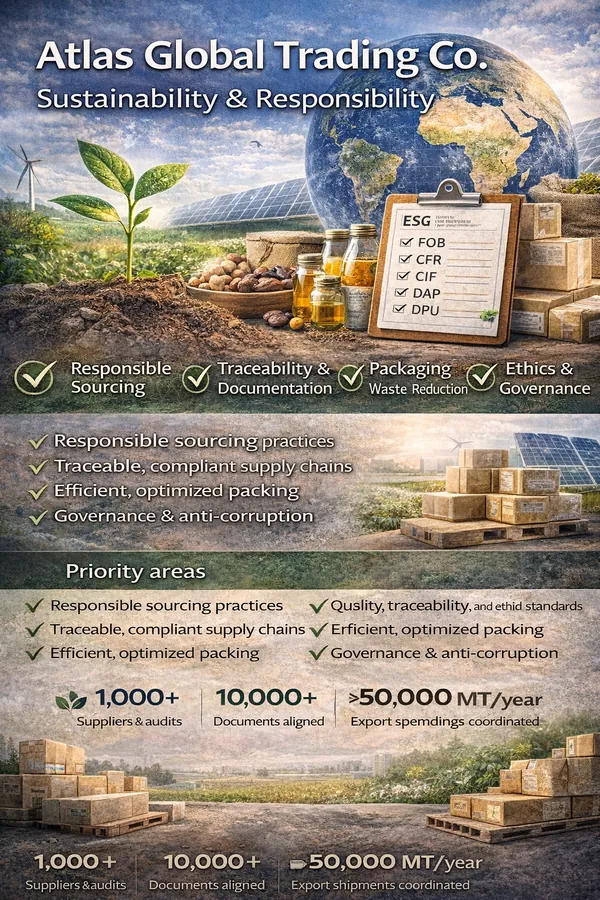
Our commitments
Sustainability is not a slogan; it is the way we specify, verify, pack, ship, and continuously improve. The commitments below apply across our group companies, adapted to each product category. Where buyers have formal ESG or supplier onboarding requirements, we aim to support the documentation and process inputs that enable your internal compliance workflows.
Responsible sourcing
Supplier screening, origin clarity, and ethical expectations aligned with long-term partnerships. We prioritize suppliers that demonstrate operational discipline, transparent product definitions, and a willingness to improve where gaps exist.
Traceability & documentation
Batch / lot traceability and paperwork discipline suitable for regulated import environments. We align core documents early so destination teams can clear goods efficiently and reduce the risk of delays, claims, or rework.
Packaging and waste awareness
Right-sized packaging, durable export packing, and options that reduce damage, returns, and waste. We encourage pack plans that protect goods while avoiding unnecessary materials and void space.
Governance & compliance
Clear commercial conduct expectations, anti-corruption stance, and buyer-aligned documentation practices. We aim for transparent communication, realistic timelines, and accurate product and origin statements.
How we apply ESG in practice
ESG performance improves when decisions are repeatable. We focus on a small number of consistent controls: clear product definitions, early documentation alignment, packing discipline, and feedback loops after shipments. These controls reduce waste (returns, re-shipments, damage), strengthen traceability, and support ethical trade.
- Verify product definition and intended use (food/industrial/project)
- Align documents and labeling before pack-out
- Encourage robust packing standards to reduce breakage and claims
- Review post-shipment outcomes and improve next cycles
Priority areas
Practical areas where we focus our efforts and expectations across the supply chain.
Food safety & quality culture
For food categories, we emphasize preventive controls, specification alignment, allergen awareness, and a sampling workflow that fits the buyer’s risk profile. We request and organize documents early so importing teams can work efficiently. Where relevant, we support COA alignment, microbiological expectations, and storage/handling notes to protect product performance.
Responsible packaging choices
Export packaging is designed to protect goods while avoiding unnecessary materials. Where feasible, we support solutions such as optimized carton sizing, pallet patterns that reduce void space, and durable materials that minimize damage and rework. For private label, we encourage clear artwork workflows to avoid misprints and waste.
Environmental awareness in operations
We encourage practices that reduce resource waste: re-shipment avoidance through correct documentation, right-first-time labeling, and consolidated loading plans. In stone supply, we prioritize packaging robustness and project planning to reduce breakage and replacement. Operationally, avoiding claims and rework is one of the most practical ways to reduce unnecessary emissions and material waste.
Ethics, integrity, and compliance
We maintain clear expectations on ethical conduct and transparent commercial practices. We support documentation accuracy, honest product definitions, and straightforward trade term alignment — to protect both buyers and suppliers. We do not support misrepresentation of origin, product type, or documentation.
Traceability & supplier discipline
We favor suppliers that can maintain clear lot identification, consistent labeling, and basic traceability records. Where buyers require deeper traceability, we align expectations early and build a workable information flow around the shipment (batch IDs, packing dates, COA references).
Continuous improvement & transparency
Our objective is to make each cycle better: faster quotation accuracy, fewer document revisions, clearer labeling, and smoother receiving. We invite feedback after shipments and incorporate improvement actions into future executions when appropriate.
Social responsibility
Our social responsibility focus is practical: strengthening long-term supplier relationships, encouraging good working standards, and supporting communities through stable demand and reliable trade. We prefer long-term programs that allow suppliers to invest in quality, compliance, and people.
For clients, we aim to make procurement easier and safer—through disciplined documentation and transparent coordination. This reduces friction for importing teams and lowers the risk of delays, claims, and waste. Where possible, we encourage clear planning and forecasting so suppliers can reduce rush production, improve quality consistency, and maintain more stable working conditions.
Long-term partnership mindset
Stable programs enable suppliers to invest in training, process control, and quality infrastructure.
Clear expectations and fair communication
Responsible trade includes accurate timelines, realistic lead times, and transparent handling of constraints.
Operational safety and product integrity
Proper packing standards and handling guidance help protect workers, reduce damage, and avoid waste.
Continuous improvement
We invite buyers to share expectations so we can align on the right controls.
Practical examples of improvement actions
Based on buyer feedback and shipment outcomes, improvement actions often include tighter label templates, clearer carton marks, updated document checklists, and refined pallet patterns to reduce damage.